ਸੰਭਾਲ਼ ਵਿਗਿਆਨ · Metals Conservation Science
Preventive Conservation of Sikh Shashtars
ਨਮੀ, ਤੇਲ ਅਤੇ ਸਹੀ ਸਟੋਰੇਜ ਦਾ ਵਿਗਿਆਨ — ਸ਼ਸਤਰ ਸਾਹਿਬ ਨੂੰ ਖ਼ੋਰ (corrosion) ਸ਼ੁਰੂ ਹੋਣ ਤੋਂ ਪਹਿਲਾਂ ਹੀ ਸੁਰੱਖਿਅਤ ਰੱਖਣ ਦਾ ਤਰੀਕਾ।
ਸਫ਼ਾਈ ਤੋਂ ਪਹਿਲਾਂ ਰੋਕਥਾਮ
ਪਿਛਲੇ ਲੇਖ ਵਿੱਚ ਅਸੀਂ ਦੇਖਿਆ ਸੀ ਕਿ ਗ਼ਲਤ ਸਫ਼ਾਈ ਦੇ ਤਰੀਕੇ ਸ਼ਸਤਰ ਸਾਹਿਬ ਦੀ ਧਾਤ ਨੂੰ ਕਿਵੇਂ ਸਥਾਈ ਨੁਕਸਾਨ ਪਹੁੰਚਾਉਂਦੇ ਹਨ। ਪਰ ਸੰਭਾਲ਼ ਵਿਗਿਆਨ ਦਾ ਅਸਲ ਟੀਚਾ ਸਫ਼ਾਈ ਨਹੀਂ — ਰੋਕਥਾਮ ਹੈ। ਜੇਕਰ ਖ਼ੋਰ ਸ਼ੁਰੂ ਹੀ ਨਾ ਹੋਵੇ, ਤਾਂ ਕਿਸੇ ਸਫ਼ਾਈ ਦੀ ਲੋੜ ਹੀ ਨਹੀਂ ਪਵੇਗੀ।
ਇਸ ਹਫ਼ਤੇ ਤੋਂ ਅਸੀਂ Preventive Conservation of Sikh Shashtars ‘ਤੇ ਧਿਆਨ ਦੇਵਾਂਗੇ — ਸ਼ੁਰੂਆਤ ਨਮੀ, ਤੇਲ, ਅਤੇ ਸਹੀ ਸਟੋਰੇਜ ਦੇ ਵਿਗਿਆਨ ਤੋਂ।
ਨਮੀ: ਖ਼ੋਰ ਦਾ ਸਭ ਤੋਂ ਵੱਡਾ ਚਾਲਕ
ਲੋਹਾ ਅਤੇ ਸਟੀਲ (ਜਿਸ ਤੋਂ ਬਹੁਤੇ ਸ਼ਸਤਰ ਸਾਹਿਬ ਬਣੇ ਹੁੰਦੇ ਹਨ) ਦੀ ਖ਼ੋਰ ਦਰ ਸਿੱਧੇ ਤੌਰ ‘ਤੇ ਸਾਪੇਖਿਕ ਨਮੀ (relative humidity) ਨਾਲ਼ ਜੁੜੀ ਹੋਈ ਹੈ।
55% RH ਤੋਂ ਉੱਪਰ: “ਪਸੀਨਾ ਆਉਣਾ” ਸ਼ੁਰੂ[1][2]
Canadian Conservation Institute ਦੇ ਅਨੁਸਾਰ, ਜਦੋਂ ਸਾਪੇਖਿਕ ਨਮੀ ਲਗਭਗ 55% ਤੋਂ ਉੱਪਰ ਜਾਂਦੀ ਹੈ, ਲੋਹੇ ਦੀ ਸਤਹ ‘ਤੇ ਮੌਜੂਦ ਕਲੋਰਾਈਡ-ਯੁਕਤ ਲੂਣ ਹਵਾ ਵਿੱਚੋਂ ਪਾਣੀ ਸੋਖਣਾ ਸ਼ੁਰੂ ਕਰ ਦਿੰਦੇ ਹਨ, ਘੁਲ ਜਾਂਦੇ ਹਨ, ਅਤੇ ਸਤਹ ‘ਤੇ ਪੀਲੇ਼-ਭੂਰੇ ਤਰਲ ਦੀਆਂ ਬੂੰਦਾਂ (“weeping” ਜਾਂ “sweating”) ਬਣਾਉਂਦੇ ਹਨ। ਇਹ ਤਰਲ ਤੇਜ਼ਾਬੀ ਹੁੰਦਾ ਹੈ, ਭਾਵ ਇਹ ਲੋਹੇ ਨੂੰ ਹੋਰ ਵੀ ਖ਼ੋਰ ਦਿੰਦਾ ਹੈ ਅਤੇ ਨੇੜੇ ਦੀਆਂ ਹੋਰ ਸਮੱਗਰੀਆਂ (ਲੱਕੜ, ਕੱਪੜਾ) ਨੂੰ ਵੀ ਨੁਕਸਾਨ ਪਹੁੰਚਾ ਸਕਦਾ ਹੈ।
ਖੋਜ ਇਹ ਵੀ ਦਰਸਾਉਂਦੀ ਹੈ ਕਿ 50–60% ਤੋਂ ਉੱਪਰ ਖ਼ੋਰ ਦੀ ਦਰ ਲਗਭਗ ਅਚਾਨਕ (exponentially) ਵਧ ਜਾਂਦੀ ਹੈ[3] — ਇਸ ਲਈ ਗੁਰਦੁਆਰੇ ਦੇ ਸਟੋਰੇਜ ਕਮਰੇ ਵਿੱਚ ਨਮੀ ਨੂੰ ਇਸ ਥ੍ਰੈਸ਼ਹੋਲਡ ਤੋਂ ਹੇਠਾਂ ਰੱਖਣਾ ਸਭ ਤੋਂ ਅਸਰਦਾਰ ਰੋਕਥਾਮ ਉਪਾਅ ਹੈ। CCI ਸਿੱਧਾ ਸਲਾਹ ਦਿੰਦੀ ਹੈ ਕਿ ਧਾਤ ਦੀ ਸਟੋਰੇਜ ਲਈ ਨਮੀ ਜਿੰਨਾ ਸੰਭਵ ਹੋ ਸਕੇ ਘੱਟ ਰੱਖੀ ਜਾਵੇ[4]।
ਤੇਲ ਦੀ ਪਤਲੀ ਪਰਤ ਅਸਲ ਵਿੱਚ ਕੰਮ ਕਿਵੇਂ ਕਰਦੀ ਹੈ
ਖ਼ੋਰ ਇੱਕ ਇਲੈਕਟ੍ਰੋਕੈਮੀਕਲ ਪ੍ਰਕਿਰਿਆ ਹੈ ਜਿਸ ਨੂੰ ਧਾਤ ਦੀ ਸਤਹ ‘ਤੇ ਪਾਣੀ ਦੇ ਅਣੂਆਂ ਦੀ ਲੋੜ ਹੁੰਦੀ ਹੈ ਤਾਂ ਜੋ ਇੱਕ “ਇਲੈਕਟ੍ਰੋਲਾਈਟ” ਬਣ ਸਕੇ।
ਤੇਲ: ਇੱਕ ਭੌਤਿਕ ਰੁਕਾਵਟ, ਰਸਾਇਣਿਕ ਇਲਾਜ ਨਹੀਂ
ਇੱਕ ਪਤਲੀ, ਸਮਤਲ ਤੇਲ ਦੀ ਪਰਤ ਧਾਤ ਦੀ ਸਤਹ ਅਤੇ ਹਵਾ ਦੀ ਨਮੀ ਵਿਚਕਾਰ ਇੱਕ ਭੌਤਿਕ ਰੁਕਾਵਟ ਬਣਾਉਂਦੀ ਹੈ, ਜਿਸ ਨਾਲ਼ ਪਾਣੀ ਦੇ ਅਣੂ ਧਾਤ ਦੀ ਸਤਹ ਤੱਕ ਪਹੁੰਚ ਹੀ ਨਹੀਂ ਸਕਦੇ — ਇਸ ਲਈ ਇਲੈਕਟ੍ਰੋਕੈਮੀਕਲ ਪ੍ਰਤੀਕਿਰਿਆ ਸ਼ੁਰੂ ਹੀ ਨਹੀਂ ਹੋ ਸਕਦੀ। ਸੰਭਾਲ਼ ਅਭਿਆਸ ਵਿੱਚ, CCI ਸਾਫ਼ ਲੋਹੇ ਦੀ ਸਤਹ ‘ਤੇ ਹਲਕੇ ਤੇਲ (ਜਿਵੇਂ ਸਿਲਾਈ ਮਸ਼ੀਨ ਤੇਲ) ਦੀ ਇੱਕ ਤਾਜ਼ੀ, ਪਤਲੀ ਪਰਤ ਲਾਉਣ ਦੀ ਸਿਫ਼ਾਰਸ਼ ਕਰਦੀ ਹੈ, ਸਾਫ਼ ਕੱਪੜੇ ਨਾਲ਼ ਪੂੰਝ ਕੇ[5]। ਧਿਆਨ ਦਿਓ — ਇਹ “ਇਲਾਜ” ਨਹੀਂ, ਸਿਰਫ਼ ਇੱਕ ਰੋਕਥਾਮ ਰੁਕਾਵਟ ਹੈ, ਜਿਸ ਨੂੰ ਨਿਯਮਿਤ ਤੌਰ ‘ਤੇ ਦੁਹਰਾਉਣ ਦੀ ਲੋੜ ਹੁੰਦੀ ਹੈ।
ਗ਼ਲਤੀਆਂ ਜੋ ਖ਼ੋਰ ਨੂੰ ਸੱਦਾ ਦਿੰਦੀਆਂ ਹਨ
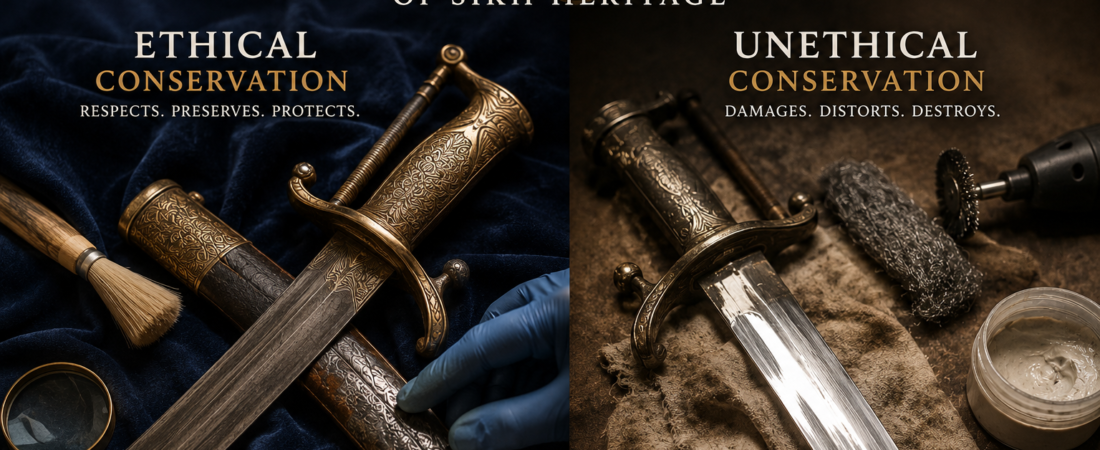
ਕਈ ਵਾਰ ਸ਼ਰਧਾ ਵਿੱਚੋਂ ਕੀਤੇ ਗਏ ਕੰਮ ਹੀ ਸਭ ਤੋਂ ਵੱਧ ਨੁਕਸਾਨ ਪਹੁੰਚਾਉਂਦੇ ਹਨ। ਇਹ ਚਾਰ ਆਮ ਗ਼ਲਤੀਆਂ ਹਨ ਜਿਨ੍ਹਾਂ ਤੋਂ ਬਚਣਾ ਚਾਹੀਦਾ ਹੈ:
ਮਹੀਨਾਵਾਰ ਰੋਕਥਾਮ ਦੇਖਭਾਲ਼ ਰੁਟੀਨ
-
ਨਮੀ ਮੀਟਰ (hygrometer) ਨਾਲ਼ ਸਟੋਰੇਜ ਥਾਂ ਦੀ ਜਾਂਚ ਕਰੋ ਇੱਕ ਸਸਤਾ ਡਿਜੀਟਲ ਹਾਈਗ੍ਰੋਮੀਟਰ ਹੀ ਕਾਫ਼ੀ ਹੈ। ਟੀਚਾ 55% RH ਤੋਂ ਹੇਠਾਂ ਰਹਿਣਾ ਹੈ, ਜਿੰਨਾ ਸੰਭਵ ਹੋ ਸਕੇ ਹੋਰ ਵੀ ਘੱਟ।
-
ਸਿਲਿਕਾ ਜੈੱਲ ਜਾਂ ਹੋਰ ਨਮੀ-ਸੋਖਕ ਪਾਓ ਬੰਦ ਸਟੋਰੇਜ ਡੱਬੇ ਵਿੱਚ ਕੰਡੀਸ਼ਨਡ ਸਿਲਿਕਾ ਜੈੱਲ ਪਾਊਚ ਰੱਖਣ ਨਾਲ਼ ਅੰਦਰਲੀ ਨਮੀ ਘੱਟ ਅਤੇ ਸਥਿਰ ਰਹਿੰਦੀ ਹੈ।
-
ਸਾਫ਼, ਸੁੱਕੇ ਕੱਪੜੇ ਨਾਲ਼ ਧੂੜ ਹਟਾਓ ਬਿਨਾਂ ਪਾਣੀ ਜਾਂ ਕਿਸੇ ਘੋਲ ਦੇ, ਸਿਰਫ਼ ਸੁੱਕੇ, ਨਰਮ ਸੂਤੀ ਕੱਪੜੇ ਨਾਲ਼ ਸਤਹ ਦੀ ਧੂੜ ਪੂੰਝੋ।
-
ਹਲਕੇ ਸੰਭਾਲ਼-ਗ੍ਰੇਡ ਤੇਲ ਦੀ ਪਤਲੀ ਪਰਤ ਲਾਓ ਸਾਫ਼ ਕੱਪੜੇ ‘ਤੇ ਕੁਝ ਬੂੰਦਾਂ ਲੈ ਕੇ ਪੂਰੀ ਸਤਹ ‘ਤੇ ਬਰਾਬਰ ਪਤਲੀ ਪਰਤ ਲਾਓ — ਵਾਧੂ ਤੇਲ ਪੂੰਝ ਦਿਓ, ਕਿਉਂਕਿ ਮੋਟੀ ਪਰਤ ਧੂੜ ਅਤੇ ਨਮੀ ਨੂੰ ਹੀ ਫਸਾਉਂਦੀ ਹੈ।
-
ਅਟੁੱਟ (inert) ਸਮੱਗਰੀ ਵਿੱਚ ਲਪੇਟ ਕੇ ਸਟੋਰ ਕਰੋ ਸਾਫ਼, ਅਣਰੰਗੀ ਸੂਤੀ ਕੱਪੜਾ ਸਭ ਤੋਂ ਸੁਰੱਖਿਅਤ ਹੈ। ਪਲਾਸਟਿਕ ਜਾਂ ਸਿੱਧੀ ਲੱਕੜ ਦੇ ਸੰਪਰਕ ਤੋਂ ਬਚੋ।
-
ਮਹੀਨੇ ਵਿੱਚ ਇੱਕ ਵਾਰ ਦੁਹਰਾਓ ਤੇਲ ਦੀ ਪਰਤ ਸਮੇਂ ਨਾਲ਼ ਪਤਲੀ ਹੁੰਦੀ ਜਾਂਦੀ ਹੈ, ਇਸ ਲਈ ਇਹ ਪੂਰੀ ਰੁਟੀਨ ਹਰ ਮਹੀਨੇ ਦੁਹਰਾਉਣੀ ਜ਼ਰੂਰੀ ਹੈ — ਖ਼ਾਸ ਕਰਕੇ ਨਮੀ ਵਾਲ਼ੇ ਮੌਸਮ ਵਿੱਚ।
ਰੋਕਥਾਮ ਹੀ ਸਭ ਤੋਂ ਵਧੀਆ ਇਲਾਜ ਹੈ
“ਜਿਸ ਸ਼ਸਤਰ ਸਾਹਿਬ ਨੂੰ ਕਦੇ ਖ਼ੋਰ ਲੱਗਣ ਹੀ ਨਹੀਂ ਦਿੱਤੀ ਗਈ, ਉਸ ਨੂੰ ਕਦੇ ਸਫ਼ਾਈ ਦੀ ਲੋੜ ਹੀ ਨਹੀਂ ਪਵੇਗੀ।”
ਨਮੀ ਨੂੰ ਥ੍ਰੈਸ਼ਹੋਲਡ ਤੋਂ ਹੇਠਾਂ ਰੱਖਣਾ, ਸਹੀ ਤੇਲ ਦੀ ਪਤਲੀ ਪਰਤ, ਅਤੇ ਅਟੁੱਟ ਸਮੱਗਰੀ ਵਿੱਚ ਸਟੋਰੇਜ — ਇਹ ਤਿੰਨੇ ਮਿਲ਼ ਕੇ ਸ਼ਸਤਰ ਸਾਹਿਬ ਨੂੰ ਖ਼ੋਰ ਸ਼ੁਰੂ ਹੋਣ ਤੋਂ ਪਹਿਲਾਂ ਹੀ ਰੋਕ ਦਿੰਦੇ ਹਨ। ਅਗਲੇ ਹਫ਼ਤੇ ਅਸੀਂ ਦੇਖਾਂਗੇ ਕਿ ਤਾਪਮਾਨ ਅਤੇ ਨਮੀ ਦੇ ਉਤਰਾਅ-ਚੜ੍ਹਾਅ — ਨਾ ਕਿ ਸਿਰਫ਼ ਸਥਿਰ ਪੱਧਰ — ਕਿਵੇਂ ਹੋਰ ਵੀ ਵੱਡਾ ਖ਼ਤਰਾ ਬਣ ਸਕਦੇ ਹਨ।
ਵਿਗਿਆਨਿਕ ਹਵਾਲੇ
- Canadian Conservation Institute. “Care and Cleaning of Iron.” CCI Notes 9/6 — “weeping”/”sweating” of chloride salts above ~55% RH, and the acidic nature of the resulting corrosion liquid.
- Canadian Conservation Institute. “Storage of Metals.” CCI Notes 9/2 — relative humidity as the key factor in metal corrosion; recommendation to keep RH as low as practical.
- ResearchGate / industrial corrosion studies — corrosion rate of metals increasing sharply (near-exponentially) above the 50–60% RH range.
- Canadian Conservation Institute. CCI Notes 9/2, “Storage of Metals” — general guidance on low, stable RH for metal storage areas.
- Canadian Conservation Institute. CCI Notes 9/6, “Care and Cleaning of Iron” — light oil (e.g., sewing machine oil) applied thin and wiped as a standard preventive barrier technique.
- Kavaliova, I.N. & Grigoriev, F.A. “Corrosive Action and Oxidation of Vegetable Oils Used in Lubricants.” Journal of Friction and Wear, 39, 535–538 (2018) — vegetable oil oxidation products reacting corrosively with metal surfaces.
- Society for Historical Archaeology. “Collections Storage and Curation” — organic acids (acetic, formic) naturally off-gassed by wood and wood adhesives, stimulating corrosion in enclosed metal storage.
ਸਾਡੇ ਕੰਮ ਦਾ ਸਾਥ ਦਿਓ
Creating research-backed conservation education for the Sikh community — like this Week 1 Shastar Wednesday post — takes time, research, and real cost. A paid subscription on our Instagram directly helps The Heritage Rescuer cover those expenses and keep this series alive online.
Subscribe on InstagramOther Professional Certification Courses to learn Sikh Heritage Preventive Care available are as follows
ਜੇਕਰ ਤੁਸੀਂ ਸ਼ਸਤਰ ਸਾਹਿਬ, ਹੱਥ-ਲਿਖਤ ਗ੍ਰੰਥਾਂ ਅਤੇ ਹੋਰ ਸਿੱਖ ਵਿਰਾਸਤੀ ਵਸਤੂਆਂ ਦੀ ਪੇਸ਼ੇਵਰ ਪੱਧਰ ਦੀ ਸੰਭਾਲ਼ ਸਿੱਖਣਾ ਚਾਹੁੰਦੇ ਹੋ, ਤਾਂ ਸਾਡੇ ਹੇਠ ਲਿਖੇ ਸਰਟੀਫ਼ਿਕੇਟ ਕੋਰਸ ਦੇਖੋ:
Professional Certificate Course in Sikh Shastars Preventive Care
ਸ਼ਸਤਰ ਸਾਹਿਬ ਦੀ ਧਾਤੂ-ਵਿਗਿਆਨ, ਖ਼ੋਰ (corrosion) ਅਤੇ ਸਹੀ ਸਾਂਭ-ਸੰਭਾਲ਼ ਦੇ ਤਰੀਕੇ ਸਿੱਖੋ।
Enroll NowArchival Calligraphy – 3 Months Certificate Course
ਟਿਕਾਊ ਸਿਆਹੀਆਂ, ਪੁਰਾਲੇਖੀ ਕਾਗਜ਼ਾਂ ਅਤੇ ਬਾਈਂਡਿੰਗ ਵਿਧੀਆਂ ਨਾਲ਼ ਗੁਰਮੁਖੀ ਹੱਥ-ਲਿਖਤ ਗ੍ਰੰਥ ਬਣਾਉਣੇ ਸਿੱਖੋ।
Enroll Nowਸਿੱਖ ਵਿਰਾਸਤ ਨਾਲ਼ ਸਬੰਧਿਤ ਸਾਡੇ ਹੋਰ ਉਤਪਾਦ ਅਤੇ ਸੇਵਾਵਾਂ
If you’re interested in learning more about our products and services related to Sikh Heritage, click the link below.
Visit Our LinktreePreventive Conservation of Sikh Shashtars: The Science of Humidity, Oil, and Storage
Prevention Before Cleaning
In our last article, we looked at how improper cleaning methods cause lasting damage to the metal of Shastar Sahib. But the real goal of conservation science isn’t cleaning — it’s prevention. If corrosion never starts in the first place, no cleaning is ever needed.
From this week onward, we’re focusing on the preventive conservation of Shastar Sahib — starting with the science of humidity, oil, and correct storage.
Humidity: The Biggest Driver of Corrosion
Iron and steel — the metals most Shastar Sahibs are made from — have a corrosion rate that is directly tied to relative humidity (RH).
Above 55% RH: “Weeping” Begins[1][2]
According to the Canadian Conservation Institute, once relative humidity climbs above roughly 55%, chloride-containing salts present on an iron surface begin absorbing water vapour from the air, dissolve, and form droplets of yellow-brown liquid on the surface — a phenomenon called “weeping” or “sweating.” This liquid is acidic, meaning it corrodes the iron further and can damage nearby materials like wood or textile as well.
Research also shows that above roughly 50–60% RH, corrosion rate increases almost exponentially[3] — which is why keeping the Gurdwara storage room’s humidity below this threshold is the single most effective preventive step available. CCI’s own guidance is direct: keep RH as low as practically possible for metal storage[4].
How a Thin Oil Film Actually Works
Corrosion is an electrochemical process that requires water molecules on the metal surface to form an “electrolyte.”
Oil: A Physical Barrier, Not a Chemical Treatment
A thin, even layer of oil creates a physical barrier between the metal surface and the moisture in the air, preventing water molecules from ever reaching the metal — so the electrochemical reaction can’t begin at all. In conservation practice, CCI recommends applying a fresh, thin coat of light oil (such as sewing machine oil) to a clean iron surface, wiped on with a clean cloth[5]. Note — this isn’t a “treatment”; it’s simply a preventive barrier, and it needs to be reapplied regularly.
Mistakes That Invite Corrosion
Often, the very things done out of devotion cause the most damage. Here are four common mistakes to avoid:
A Monthly Preventive Care Routine
-
Check the storage area with a hygrometer An inexpensive digital hygrometer is enough. The goal is to stay below 55% RH — lower is even better.
-
Add silica gel or another moisture absorber Placing a conditioned silica gel packet inside a closed storage box keeps internal humidity low and stable.
-
Remove dust with a clean, dry cloth Wipe surface dust using only a dry, soft cotton cloth — no water or any solution.
-
Apply a thin coat of light, conservation-grade oil Take a few drops on a clean cloth and apply an even, thin coat across the whole surface — wipe off any excess, since a thick layer only traps dust and moisture.
-
Store wrapped in an inert material Clean, undyed cotton cloth is safest. Avoid direct contact with plastic or raw wood.
-
Repeat once a month The oil layer thins out over time, so this entire routine should be repeated every month — especially during humid seasons.
Prevention Is the Best Treatment
“A Shastar Sahib that is never allowed to corrode will never need cleaning.”
Keeping humidity below the threshold, applying a correct thin oil layer, and storing in inert materials — together, these three steps stop corrosion before it ever begins. Next week, we’ll look at how fluctuation in temperature and humidity — not just steady levels — can pose an even bigger risk.
Scientific References
- Canadian Conservation Institute. “Care and Cleaning of Iron.” CCI Notes 9/6 — “weeping”/”sweating” of chloride salts above ~55% RH, and the acidic nature of the resulting corrosion liquid.
- Canadian Conservation Institute. “Storage of Metals.” CCI Notes 9/2 — relative humidity as the key factor in metal corrosion; recommendation to keep RH as low as practical.
- ResearchGate / industrial corrosion studies — corrosion rate of metals increasing sharply (near-exponentially) above the 50–60% RH range.
- Canadian Conservation Institute. CCI Notes 9/2, “Storage of Metals” — general guidance on low, stable RH for metal storage areas.
- Canadian Conservation Institute. CCI Notes 9/6, “Care and Cleaning of Iron” — light oil (e.g., sewing machine oil) applied thin and wiped as a standard preventive barrier technique.
- Kavaliova, I.N. & Grigoriev, F.A. “Corrosive Action and Oxidation of Vegetable Oils Used in Lubricants.” Journal of Friction and Wear, 39, 535–538 (2018) — vegetable oil oxidation products reacting corrosively with metal surfaces.
- Society for Historical Archaeology. “Collections Storage and Curation” — organic acids (acetic, formic) naturally off-gassed by wood and wood adhesives, stimulating corrosion in enclosed metal storage.
Support The Heritage Rescuer
Creating research-backed conservation education for the Sikh community — like this Week 1 Shastar Wednesday post — takes time, research, and real cost. A paid subscription on our Instagram directly helps The Heritage Rescuer cover those expenses and keep this series alive online.
Subscribe on InstagramOther Professional Certification Courses to learn Sikh Heritage Preventive Care available are as follows
If you’d like to learn professional-level conservation of Shastar Sahib, handwritten manuscripts, and other Sikh heritage objects, take a look at our certificate courses below:
Professional Certificate Course in Sikh Shastars Preventive Care
Learn the metallurgy, corrosion science, and correct preventive care methods for Shastar Sahib.
Enroll NowArchival Calligraphy – 3 Months Certificate Course
Learn to create Gurmukhi manuscripts using durable inks, archival papers, and binding methods.
Enroll NowOur Products & Services Related to Sikh Heritage
If you’re interested in learning more about our products and services related to Sikh Heritage, click the link below.
Visit Our Linktree